
It's not surprising or unnatural that much of what I write on here is about things that not only concern me, but things that I think should concern others - starting with anyone interested enough to be reading my thoughts in the first place. That can make it hard not to sound downbeat, the news business has always been better at telling us what's broken than what's being repaired. "Everything is OK" is never going to make a great (or believable) headline. But I do have faith in humanity, in society, and in the knowledge that people are still solving problems, making discoveries, and that occasionally things go right. So every now and then I'm going to share a few examples of just that. Welcome to Reasons To Be Cheerful – Part One.
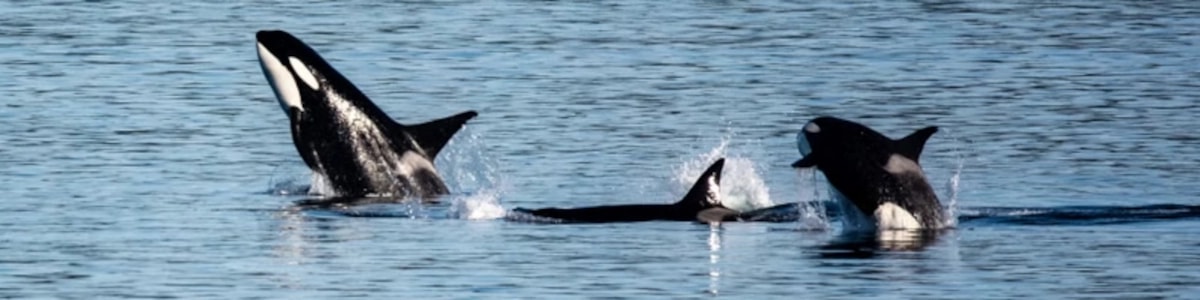
The Orcas Are Back
Killer whales have recently been spotted off the Northumberland coast in numbers rarely seen in recent decades.
I know. "Killer whale" doesn't sound especially cheerful. But the return of a species previously thought lost to a particular area is often a sign that an ecosystem is recovering. We've become accustomed to stories about disappearing species and collapsing habitats, but in this case wildlife experts say Orcas may be coming back to UK waters more often due to fish supplies being more abundant.
There is something undeniably uplifting about the thought of a pod of orcas cruising along the British coastline as if they own the fishing rights to the place, which, to be fair, they probably did long before we arrived.
Communities Taking Power
The government has announced a £1 billion programme intended to support community energy projects across the UK.
It's about ownership.
Now, let's be clear,the good news here isn't about solar panels, wind turbines or batteries - we can roast that beef elsewhere. It's about ownership. For years we've been told that everything works best when ownership is concentrated in ever-larger organisations - who have an entrenched habit of extracting value for shareholder dividends and CEO bonuses. Yet some of our most resilient institutions are community-owned. Think co-operatives, social enterprises or credit unions. From small local organisations run by people with a direct stake in the outcome, to major organisations like the Co-op or R.N.L.I.
The idea that communities might generate and benefit from their own energy feels less like a technological breakthrough and more like a reminder that ordinary people can still own things together and still make good things happen together. That's still a radical idea.
Cancer Research Has Been Having A Bit Of A Field Day Lately
Medical research rarely produces a single dramatic breakthrough that changes everything overnight, what it produces is steady progress.
Amivantamab, can make cancers disappear altogether
University researchers in New York have found a combination of a vaccine and a drug has proven successful in cutting the risk of skin cancer recurrence and death by almost half. Another study has suggested that use of weight loss drugs significantly lowered the likelihood of being diagnosed with cancers “directly fuelled by excess body weight”, such as breast, bowel, pancreas, kidney, liver or stomach cancer. In the UK a revolutionary new drug, Amivantamab, can make cancers disappear altogether. Of 102 head and neck cancer patients in the trial, 42% saw their tumours shrink and 15 patients experienced complete tumour disappearance. The other remarkable thing about this discovery is Amivantamab is administered by injection just once every three weeks.
We are still a long way from eradicating cancer, but the hope grows stronger with every breakthrough.
Fashion Doesn't Have To Cost The Earth
We don't normally think about what we wear as pollution, but nearly 70 per cent of all clothing contains plastic in some form, and the fashion industry contributes nearly 100 million tons to the world's landfill sites every year. But now researchers have developed recyclable protein-based textile fibres that could help reduce both clothing waste and microplastic pollution.
The protein-based materials are produced in bioreactors (think giant brewing tanks) using genetically engineered microbes. These can be recycled after use and remade into the same fibers many times over. Plus, any microparticles released from these fibers during washing, would be biodegradable.
There is as yet no guarantee that this technology will take hold and transform what we wear, but it's good news that people are looking for solutions to a massive everyday problem.
Enjoyed this article?
If you found it interesting, useful, infuriating, thought-provoking, or simply worth the time it took to read, you can help keep the kettle boiling by buying me a coffee (£3).
Or, if you think it more appropriate, perhaps a pint! (£5) .
Still got the kettle on?
Browse everything I've published so far.